.jpg)
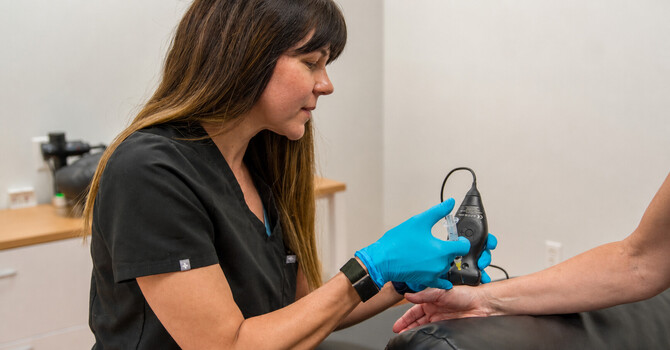
If you’re dealing with ongoing joint pain, muscle tightness, arthritis, or an injury that hasn’t fully resolved, injection therapy may be an important part of your treatment plan.
At Structural Elements®, injection therapy is now offered as part of our Regenerative Medicine service - a comprehensive orthopedic medical approach designed to support the body’s natural ability to heal, reduce pain, and improve long-term function.
Rather than simply asking which injection is appropriate, we begin by understanding why healing has slowed and what your body needs to move forward.
That’s because we don’t view joints or injuries in isolation. Your body functions as a connected system, and how one area moves or compensates directly impacts another. Every treatment recommendation is made within the context of your overall orthopedic health.
Who Is Injection Therapy For?
Injection therapy may be appropriate if you are:
- Experiencing persistent joint pain in the knee, hip, shoulder, or other joints
- Recovering from a tendon or ligament injury
- Managing arthritis or joint degeneration
- Dealing with chronic muscle pain or tightness that limits movement
- Experiencing chronic headaches or certain nerve-related pain conditions
- Looking for non-surgical treatment options
- No longer making the progress you expected with orthopedic treatment, rehabilitation, or movement-based care
For many patients, injection therapy also provides an opportunity to remain active, improve function, and potentially delay or avoid more invasive procedures.
When Is Injection Therapy Recommended?
Injection therapy isn’t always the first step.
At Structural Elements®, every regenerative medicine plan begins with a comprehensive orthopedic medical evaluation. Your provider evaluates your symptoms, medical history, previous treatments, imaging, and clinical findings to determine whether injection therapy is appropriate and which type of injection best fits your condition.
Injection therapy may be recommended when:
- Pain is limiting your ability to move, exercise, or build strength
- Healing has plateaued despite conservative care
- A more targeted medical intervention is appropriate
- Additional support is needed to help your body recover
Our goal is not simply to reduce pain, but to create the conditions that allow you to move better, heal more effectively, and return to the activities you enjoy.
Injection Therapies We Offer
Not every injection serves the same purpose. Your provider will recommend the treatment, or combination of treatments, that best supports your diagnosis and goals.
Platelet-Rich Plasma (PRP)
PRP uses a concentrated portion of your own blood, rich in platelets and growth factors, to support the body’s natural healing response. It is commonly used for tendon injuries, ligament injuries, and certain degenerative orthopedic conditions.
Alpha-2-Macroglobulin (A2M)
A2M is a naturally occurring protein found in your blood that helps regulate enzymes involved in cartilage breakdown and inflammation. It may be recommended for patients looking to support joint preservation and long-term joint health.
Hyaluronic Acid (HA)
Hyaluronic acid helps improve joint lubrication, reduce friction, and relieve pain associated with osteoarthritis while supporting healthier joint movement.
Trigger Point Injections
Trigger point injections help release painful muscle knots and areas of chronic muscular tension to improve mobility and reduce discomfort.
Corticosteroid Injections
Corticosteroid injections reduce inflammation and may provide relief for certain orthopedic conditions when used as part of a comprehensive treatment plan.
Occipital Nerve Blocks
Occipital nerve blocks may be recommended for certain headache conditions and nerve-related pain originating from the back of the head and neck.
More Than An Injection
At many clinics, an injection is the treatment.
At Structural Elements®, it’s one part of a larger regenerative medicine plan.
Your provider may also recommend additional diagnostics, imaging, laboratory or biomarker testing, IV Therapy, (se)® Treatment, movement-based care, or Recovery & Performance services to create a more complete approach to healing.
Because our providers work together under one roof, your care doesn’t stop after the injection. It continues through an integrated orthopedic wellness system designed to support long-term recovery and function.
What to Expect
Your first appointment begins with a Regenerative Medicine - Initial Assessment with Jodi Mayo, PA-C.
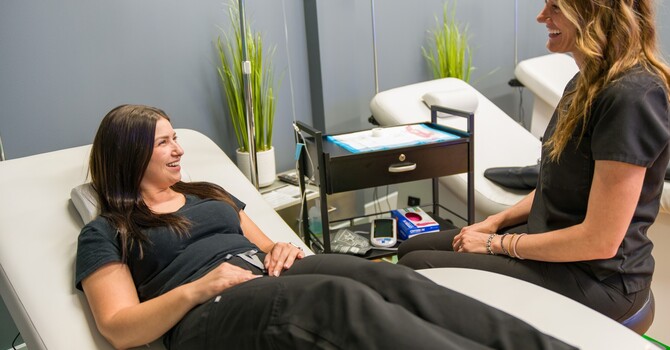
During your visit, she’ll determine whether injection therapy is appropriate for your condition and develop a personalized treatment plan. Some injections may be performed the same day, while others are scheduled based on the type of treatment recommended.
Recovery timelines vary depending on the procedure. Some injections provide more immediate symptom relief, while others work by supporting the body’s natural healing response over time.
A More Targeted Approach to Care
Injection Therapy can help reduce pain, but more importantly, it can create the opportunity for your body to move and function better.
For many patients, this means:
- Returning to activity with less discomfort
- Improving strength and mobility
- Supporting long-term joint health
- Extending the life of your joints and exploring non-surgical options longer
Looking for Injection Therapy?
If you’re searching for injection therapy, the best place to begin is with our Regenerative Medicine - Initial Assessment.
Rather than scheduling a specific injection, you’ll meet with Jodi Mayo, PA-C for a comprehensive orthopedic medical evaluation to determine which treatment, or combination of treatments, will best support your recovery and long-term orthopedic health.
.jpg)